
One of the world’s most familiar painkillers was tested against placebo for acute low-back pain. The results challenged something medicine had taken for granted.
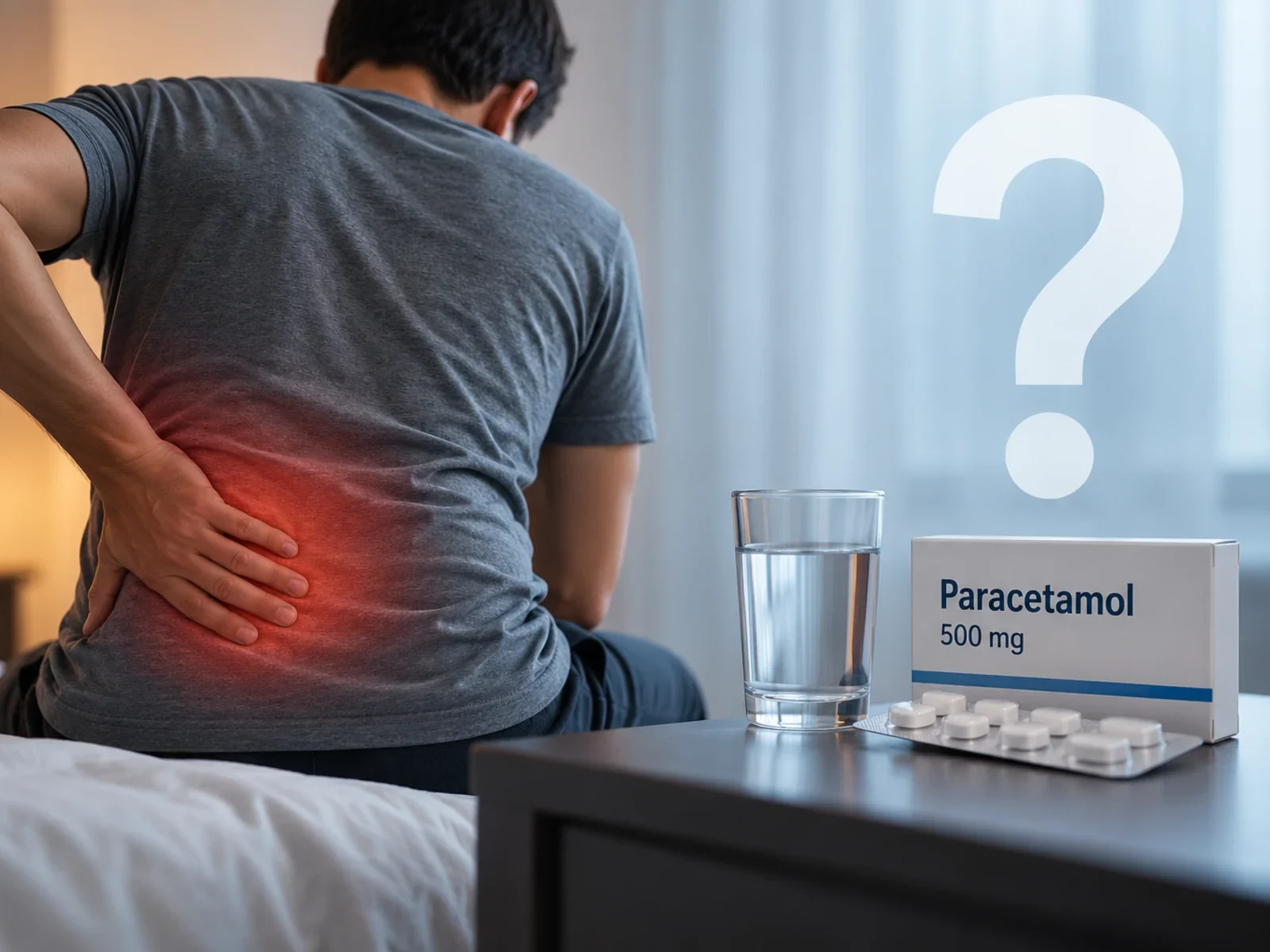
Paracetamol is one of those medicines we rarely think twice about. Headache? Paracetamol. Fever? Paracetamol. Back pain? Quite often, paracetamol again.
But there is an uncomfortable question hidden in that routine.
What if a medicine can genuinely relieve pain, yet offer almost no benefit for one of the most common painful conditions?
That is not merely a theoretical possibility. It is what researchers found when they put paracetamol to the test for acute low-back pain.
And the results were difficult to ignore.
The 17th-day
In 2014, researchers published a large randomized controlled trial in The Lancet, now commonly known as the PACE trial.
They recruited 1,652 people with acute low-back pain and randomly assigned them to three groups. One received paracetamol regularly, another took it as needed, and the third received placebo.
All three groups received evidence-based advice for managing their back pain.
The researchers wanted to know whether paracetamol helped people recover faster.
Here is what happened.
|
MEDIAN TIME TO RECOVERY |
|
|
Regular paracetamol |
17 days |
|
Paracetamol as needed |
17 days |
|
Placebo |
16 days |
Source: PACE randomized trial, The Lancet (2014). [1]
Seventeen. Seventeen. Sixteen.
The differences were not statistically significant.
Patients taking paracetamol did not recover faster than those taking placebo. The study also found no meaningful differences between the groups across several other measured outcomes, including pain intensity and disability.
For a medicine so routinely associated with pain relief, this was an important finding.
It did not mean that paracetamol was a fake painkiller. It meant that its effectiveness could not simply be assumed because the condition involved pain.
But paracetamol does relieve pain. So what is happening?
In my earlier article on how paracetamol works, I explored why the mechanism of this familiar medicine remains surprisingly difficult to explain completely.
We know it affects several pathways involved in pain processing. Prostaglandin signaling, serotonin, and the metabolite AM404 are among the proposed contributors. More recent research has suggested possible effects on peripheral sodium channels involved in pain transmission.
But here is a distinction that deserves more attention.
A medicine having a mechanism of action does not guarantee that it will produce a meaningful clinical benefit for every condition involving that mechanism.
Pain is not one biological disease.
A postoperative wound, a migraine, an inflamed joint, and nonspecific low-back pain can all produce pain, but the processes contributing to that pain are not identical.
Low-back pain itself can involve muscular, spinal, neurological, and other factors. In many patients, no single identifiable structural cause explains the symptoms.
It is therefore reasonable that a drug capable of altering pain signaling might not provide sufficient benefit in every pain condition.
That is a possible explanation for the mismatch. It is not proof of exactly why paracetamol underperformed in the PACE trial.
The clinical evidence tells us something more practical: whatever pathways paracetamol acts through, their net effect was not enough to improve the measured outcomes in that population.
One trial is interesting. What happened when researchers looked further?
The PACE trial did not remain an isolated observation.
A 2016 Cochrane review examined the available randomized evidence for paracetamol in low-back pain. It concluded that paracetamol did not produce better outcomes than placebo for acute low-back pain. [2]
A broader 2023 overview of Cochrane reviews reached a similar conclusion. It found high-certainty evidence of no meaningful difference between paracetamol and placebo in pain intensity or disability for acute low-back pain. [3]
That matters because the question had moved beyond one unexpected study.
Multiple evidence assessments were pointing in the same direction.
There is, however, an important boundary: most of this strong evidence concerns acute nonspecific low-back pain. It should not automatically be extended to every chronic back-pain condition, spinal disorder, or painful disease.
Guidelines have noticed. Have our assumptions?
The UK’s National Institute for Health and Care Excellence (NICE) now explicitly recommends against offering paracetamol alone for low-back pain. [4]
That is a significant change from the older assumption that a widely used, generally well-tolerated painkiller should naturally be the first treatment for a common pain complaint.
It does not mean replacing paracetamol with a different tablet is always the answer.
For many people with uncomplicated low-back pain, reassurance, appropriate activity, and exercise-based management are important parts of care.
Anti-inflammatory medicines such as ibuprofen may provide some relief in selected patients, but their average benefits for acute low-back pain are generally modest, and their gastrointestinal, kidney, and cardiovascular risks need consideration.
And before any routine treatment plan, clinicians still need to identify the smaller group of patients whose back pain may reflect something more serious, such as fracture, infection, malignancy, or significant neurological compression.
The diagnosis, the patient’s condition, and the treatment goal matter more than simply choosing a drug labelled painkiller.
What if someone says paracetamol helped their back pain?
That experience should not be dismissed.
Pain is subjective, symptoms fluctuate, and individuals can respond differently to treatment.
But there is an important distinction between feeling better after taking a medicine and demonstrating that the medicine caused the improvement.
Many episodes of acute low-back pain improve with time. People may also modify their activity, rest temporarily, receive reassurance, or use other measures alongside medication.
Randomized placebo-controlled trials help separate those influences from the medicine’s actual additional benefit.
A negative average trial result does not establish that no individual could ever benefit. It does tell us that a routine treatment recommendation needs stronger justification than personal familiarity.
The question worth asking
When I first explored paracetamol, the interesting question was how such a familiar medicine could work through mechanisms we still do not completely understand.
This time, the question is different.
Even when a drug works biologically, how do we know whether it helps the patient in front of us?
That is what makes the back-pain evidence so interesting.
Paracetamol did not suddenly lose its pharmacology when researchers studied low-back pain. It remained the same medicine, with the same proposed mechanisms.
What changed was the condition being treated and the evidence used to judge the result.
Perhaps the most important question about a painkiller is not simply whether it relieves pain, but which pain, in which patients, and by how much.
That is a distinction worth remembering before reaching for the next familiar tablet.