

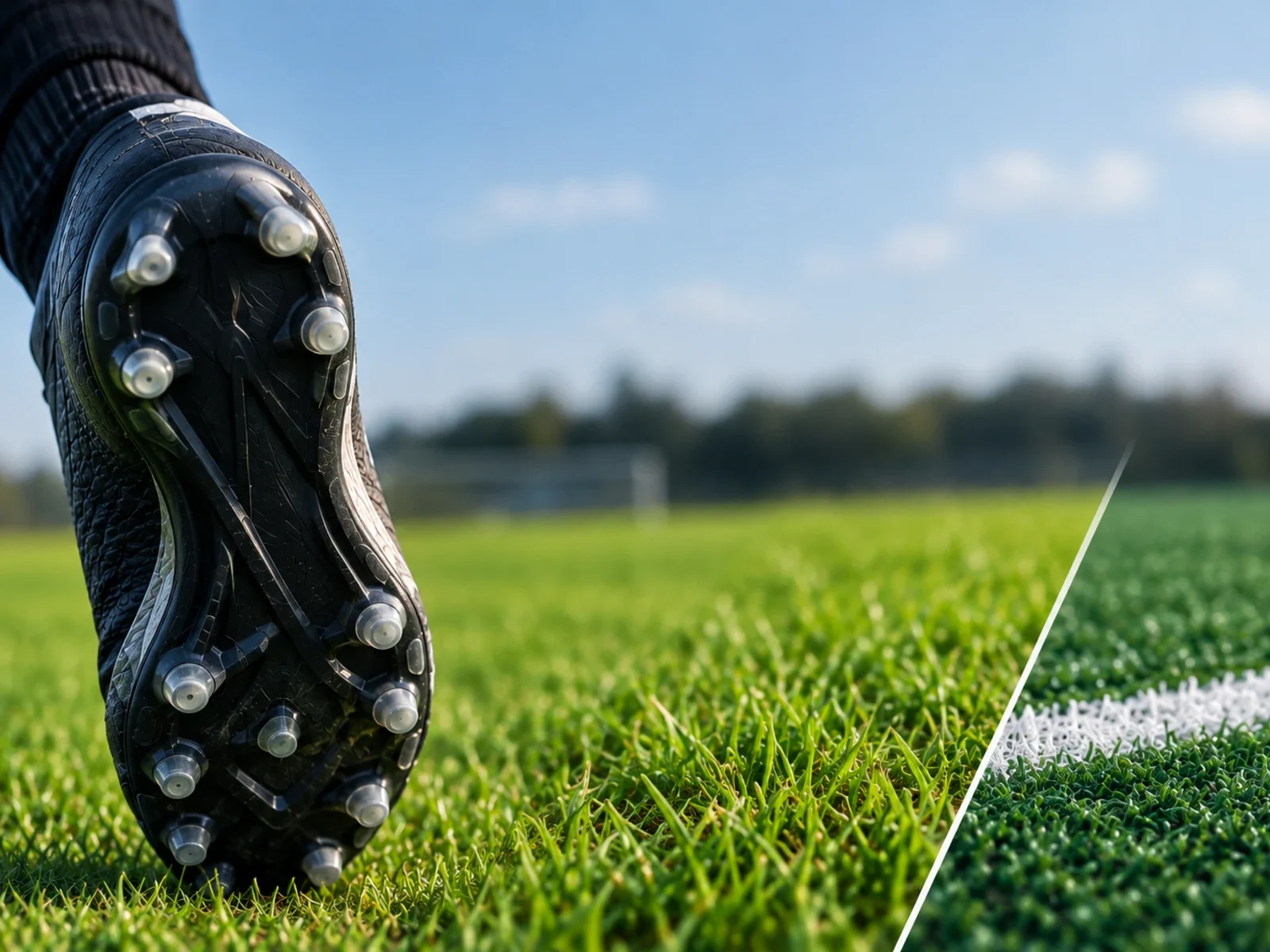
Football, known as soccer to some, is widely recognized as one of the most popular sports globally. Billions of spectators follow the game, and millions participate at various levels, from professional leagues to casual Sunday matches with friends. Its appeal transcends age, gender, and socioeconomic status.
The sport’s extensive popularity has led to a proportional increase in the demand for playing facilities. While natural grass is the conventional playing surface, its availability is not universal. Consequently, the use of artificial turf has grown due to its durability, ease of maintenance, and consistent playing characteristics.
In a high-intensity sport such as football, the occurrence of injuries, particularly to the lower limbs, is an inherent aspect. The contributing factors to these injuries are diverse and multifactorial, encompassing elements like playing surface, footwear, and player movement, often resulting in non-contact injuries.
A prevalent question in this context is: “Does Artificial Turf increase the risk of lower limb injuries, or is its influence on injury risk more complex than commonly perceived?”
This article will review the existing evidence to understand its implications for players, clinicians, coaches, and football organizations.
What does the evidence suggest?
A 2023 systematic review and meta-analysis, which analyzed football injuries on artificial turf and included a control group playing on natural grass, found a lower incidence of injury on artificial turf compared to natural grass for both men and women. Professional players experienced a lower injury incidence on artificial turf, while amateur players showed similar incidence rates across surfaces. Additionally, non-contact injuries and muscle strains were less frequent on artificial turf.[6]
Regarding the anatomical distribution of injuries, a review of 53 studies published between 1972 and 2020 reported higher rates of foot and ankle injuries on artificial turf compared to natural grass, with similar rates of knee and hip injuries across both playing surfaces. Only few studies have reported higher overall injury rates on natural grass compared to that of artificial turf , these studies were funded by the artificial turf industry, which should be considered when interpreting those findings. [4-5]
Was the concern over artificial turf overstated?
Based on the interpretation of the available evidence, artificial turf does not appear to be a major factor in overall injury risk. Instead, it seems to contribute specifically to certain anatomical injuries but, in general, exhibits a lower incidence of lower limb injuries compared to natural grass.[2]
If not the playing surface, what other factors, in conjunction with the playing surface, increase injury risk?
Biomechanics:
To comprehend the origins of injuries, it is essential to understand how forces are generated, transmitted, and absorbed by the body during movements such as sprinting, cutting, jumping, landing, and kicking. Key factors include ground reaction forces, traction between the boot and the playing surface, foot-surface interaction, running and cutting mechanics, landing mechanics, muscle strength and fatigue, prior injury history, and player-specific characteristics. As previously noted, injury causation is multifactorial rather than attributable to a single element. Gaining insight into these factors will facilitate the understanding and development of strategies to mitigate non-contact injuries.
Biomechanics itself is an extensive field of study; however, as this article focuses on the relationship between playing surfaces and injury risk, the scope will be limited accordingly.
A simplistic comparison of surfaces, merely stating that grass is “softer” and artificial turf is “harder”, is superficial. We are naturally inclined to the idea that ‘natural grass offers superior shock absorption compared to artificial turf’, thereby reducing impact on the foot and muscles but that’s only true if it is well-maintained with adequate conditioning of the grass. With the advent of advanced artificial turf systems designed to emulate the playing characteristics of natural grass through the composition and quality of infill materials, the difference in surface-foot interaction has diminished significantly. Instead, proper maintenance of respective surfaces is paramount. While artificial surfaces offer consistency and ease of maintenance compared to natural grass, which is subject to natural factors like soil condition, water drainage, and weather, conditioning artificial turf to reduce injury risk is simpler. However, not all artificial turf meets the required standards, and a significant proportion of low-grade turfs contribute to injury risk, leading to the assertion that artificial turf causes more injuries. Ultimately, injury risk is dependent on the quality, grade, and upkeep of the turf.[9]
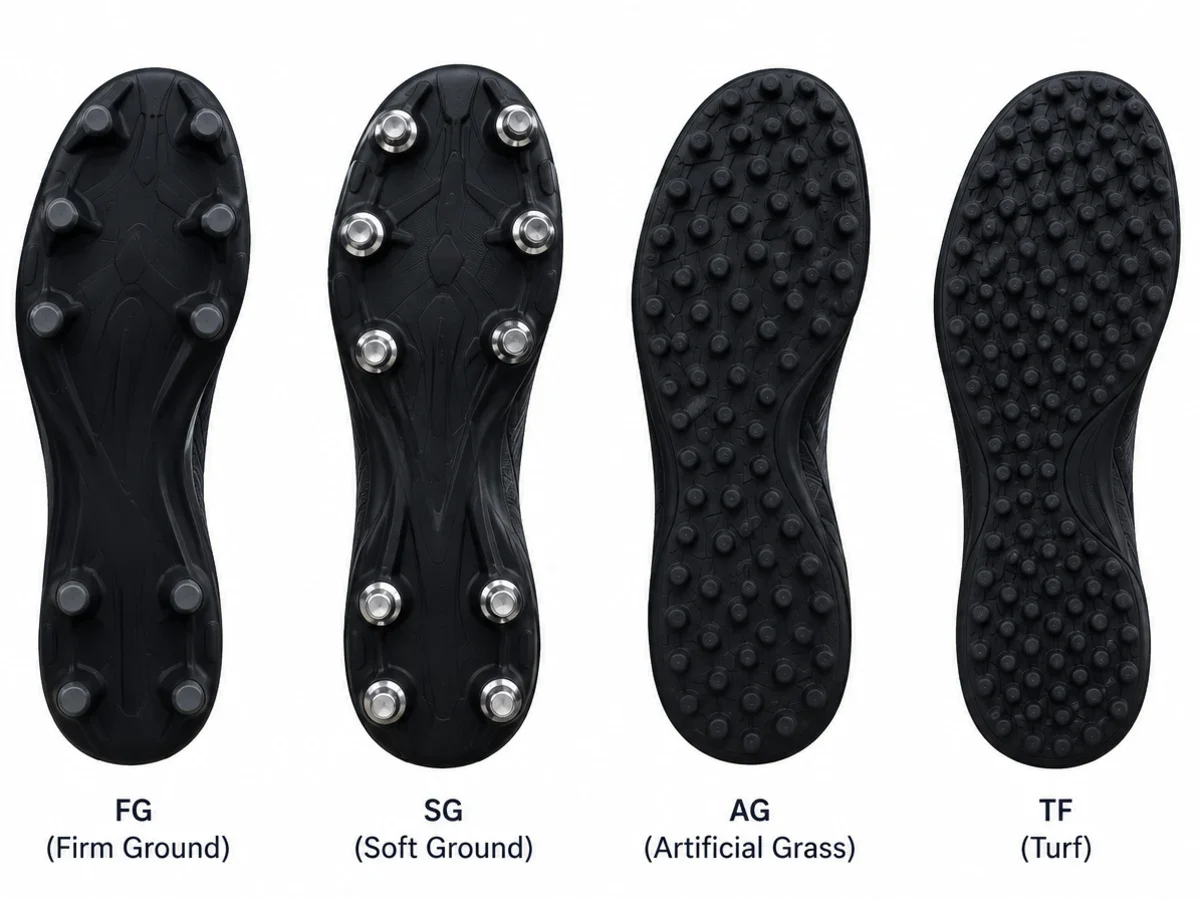
An associated factor to the playing surface is the footwear, specifically boots or cleats. The type of shoe unequivocally matters. Studs provide traction, preventing sliding, which can lead to overstretch and tear injuries, and ensure adequate penetration into the surface. There are five types of soles categorized by surface: TF (Turf), AG (Artificial Grass), HG (Hard Ground), FG (Firm Ground), and SG (Soft Ground), differing in size, number, distribution, and type of studs. TF and AG soles are designed for artificial fields, HG for hard natural fields, FG for natural grass, and SG for muddy or wet fields. Selecting a sole appropriate to the surface uniformly distributes ground interaction forces, optimizes traction, facilitates sudden changes in direction, and reduces the incidence of ankle and foot injuries.[7-8]
The pivotal factor then becomes movement, encompassing actions such as standing, acceleration, deceleration, cutting, sliding, and kicking. These movements are regulated by muscles and ligaments, along with their force transmission capabilities, and are dependent on the grip, friction, and stiffness between the boots and the playing surface. Conditioned muscles are better equipped to withstand these pressures, explaining why professional footballers can execute these movements with a lower risk of injury. Conversely, amateur players who engage in recreational activities without proper conditioning and training are more susceptible to injuries.
How can this issue be addressed clinically and practically?
For players, it is crucial to select appropriate footwear and sole types based on the playing surface. A gradual adaptation when transitioning from natural grass to artificial turf is advisable, considering the differing movement and loading patterns. Players should also be mindful of potential changes in muscle, tendon, and joint loading, especially following an injury or during the preseason period.
For coaches, proper monitoring of training load is essential. This includes overseeing training volume, intensity, the type of playing surface, footwear, and environmental conditions. Drills should be modified according to the surface; on high-traction surfaces, coaches should be cautious about sessions that involve extensive maximal sprinting, aggressive cutting, repeated decelerations, or sudden changes of direction.
For clinicians, the process involves assessing and identifying the injury, determining its cause, and considering the influence of the playing surface, surface condition, footwear, and the movements that led to the injury. Return-to-play decisions should incorporate progressive exposure to the playing surface and movement demands as part of the rehabilitation process. Risk asessment can incorporate player-specific factors, boot-surface interactions, and biomechanical loading during movement, although no single combination of these factors can reliably predict an individual injury.
For pitch managers and clubs, regular assessment of surface characteristics is vital. This includes evaluating surface hardness, shock absorption, infill depth, turf fiber condition, surface temperature, and drainage.
A comprehensive understanding and consistent implementation of these measures across all levels will contribute to a reduction in injury risk, facilitate more effective return-to-play and rehabilitation processes, enhance athlete physical health, and minimize prolonged absences due to re-injuries.
Limitation
The available literature is heterogeneous with respect to player population, injury definitions, artificial turf generation, footwear and study methodology. Consequently, direct comparison between studies is challenging
Conclusion
Playing surface is an important but often underestimated component of football injury risk. The effect of a surface cannot be considered in isolation, as injury risk is determined by the complex interaction between surface characteristics, footwear, player factors and movement biomechanics. Differences in surface stiffness, deformation, shock absorption and traction can alter the way forces are generated, absorbed and transmitted through the lower limb.
Artificial turf should therefore not simply be labelled as more or less dangerous than natural grass. Large observational evidence suggests that overall injury rates may be similar or even lower on modern artificial surfaces, while injury patterns can differ according to anatomical location, sex, competition level, turf characteristics and footwear.
Understanding the surface–boot–player interaction has practical importance for injury prevention. Appropriate footwear selection, regular surface assessment, progressive adaptation to different playing surfaces, monitoring of training loads and surface-specific rehabilitation may help optimize the mechanical demands on players.
Ultimately, the objective should not be to identify a universally “safer” surface, but to optimize the interaction between the player, footwear and playing surface so that adequate traction and force transmission are achieved without unnecessary high mechanical loading.